
In a hidden kingdom, a brave princess and a clever knight embark on a magical quest to find a powerful artifact that can lift a mysterious curse.
Age Recommendation
3 – 12 years
Characters
Characters:
- Princess Elowen (a brave and kind-hearted princess with a love for adventure)
- Knight Thorne (a clever and loyal knight, friend to the princess)
- Queen Morwenna (the wise and gentle ruler of the kingdom)
- The Enchanted Owl (a magical creature that guides the heroes)
Story
Once upon a time, in the hidden kingdom of Eldoria, there lived a brave princess named Elowen. She was known for her courage and kindness, and she loved exploring the forests surrounding her castle. One day, while wandering through the lush green woods, she stumbled upon an ancient, dusty spellbook. Curious, she took it back to the castle to show her best friend, Knight Thorne.
The Forgotten Spellbook
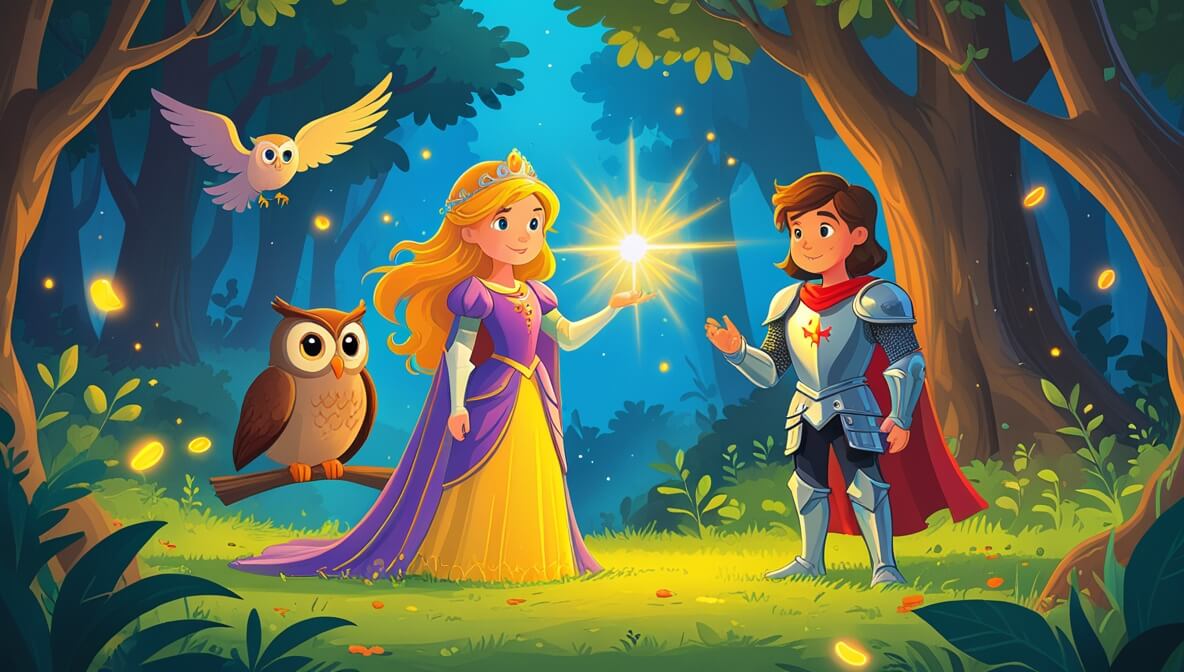
Thorne, ever the curious knight, was fascinated by the spellbook, which was said to hold secrets that could lift any curse. Together, they decided to read the book, hoping to uncover its mysteries. As they read, a small, shimmering owl flew into the room, its eyes gleaming with wisdom. “I am the Enchanted Owl,” it hooted softly, “and I can help you understand the power within this book.”
The Queen’s Dilemma
Their joy was short-lived. That evening, Queen Morwenna revealed a startling truth. A wicked curse had been placed on the kingdom, casting a shadow over their once vibrant land. To save Eldoria, they needed the Crown of Light, a magical artifact mentioned in the spellbook. Without it, the curse would remain forever.
A Journey Through the Enchanted Forest
Determined to save their kingdom, Princess Elowen and Knight Thorne set off with the Enchanted Owl as their guide. They ventured deep into the Enchanted Forest, where trees whispered secrets and streams sang songs of old. As they journeyed, the owl shared stories of the forest’s magic and the trials they would face.
The Dragon’s Test
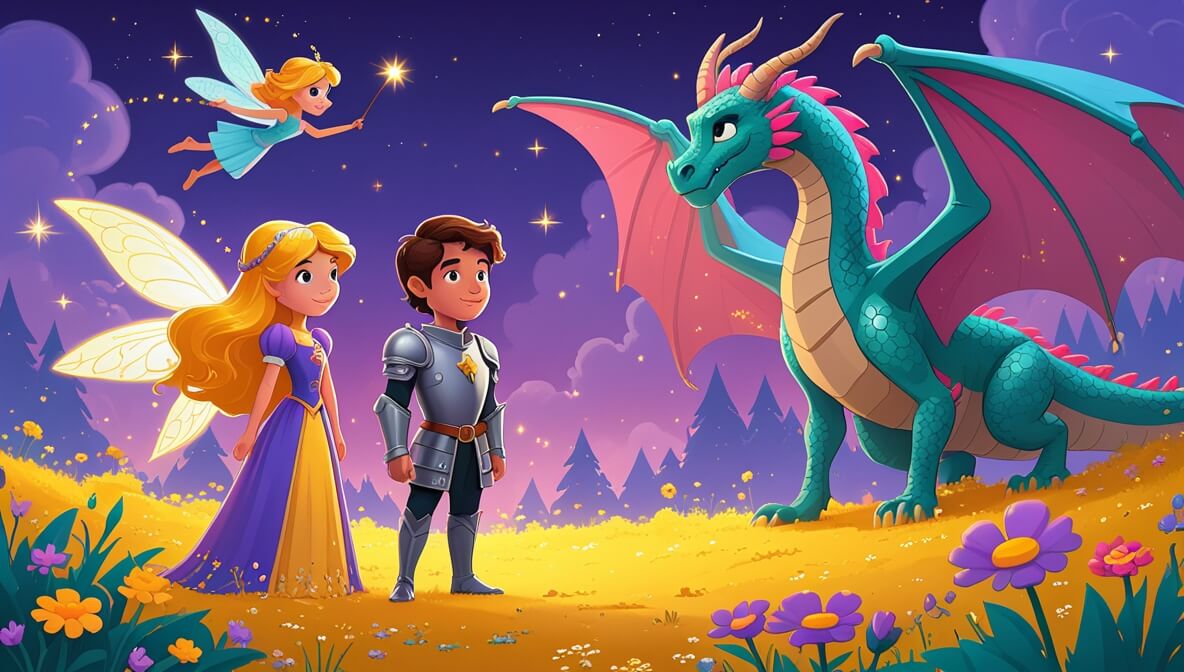
One day, they encountered a great, swirling mist. From it emerged a magnificent dragon with scales that shimmered like sapphires. “To pass, you must prove your bravery,” the dragon rumbled. Without hesitation, Elowen stepped forward, her heart steady and strong. “We seek the Crown of Light to save our kingdom,” she declared. Impressed by her courage, the dragon allowed them to continue.
A Secret Cave in the Mist
Guided by the dragon’s directions, they found a hidden cave cloaked in mist. Inside, they discovered the Crown of Light, gleaming with a radiant glow. As Elowen placed it upon her head, the curse began to lift, and the kingdom of Eldoria was bathed in sunshine once more.
With the curse broken, Queen Morwenna welcomed them back with open arms. The kingdom rejoiced, and Elowen and Thorne were celebrated as heroes. The Enchanted Owl returned to the forest, its mission fulfilled, leaving behind a trail of stardust as a reminder of the magic that dwells in the heart of the brave.
The end.
Moral of the Story
The tale of Princess Elowen and Knight Thorne teaches us the importance of courage and friendship. No challenge is too great when we work together and believe in the magic within ourselves. It also shows that true bravery is standing up for what is right, even when the path is uncertain.
Questions to Think About
- What gave Princess Elowen the courage to face the dragon?
- How did Knight Thorne show his cleverness during their journey?
- What role did the Enchanted Owl play in their adventure?
- Why was the Crown of Light important to the kingdom?
- How can we find courage in our everyday lives?
Do You Know
- The owl is often seen as a symbol of wisdom and guidance in many cultures.
- Dragons, in many myths, are guardians of treasures and symbols of strength.
Word Explorer
- Ancient: Very old, from a long time ago.
- Shimmering: Sparkling or shining softly.
- Courage: Being brave and facing fears.
Emotions in the Story
- Curiosity: When Elowen found the spellbook and wanted to know more about it.
- Bravery: When Elowen and Thorne set off on their adventure to save the kingdom.
- Joy: When the kingdom rejoiced as the curse was lifted.
Color Your Scene
Imagine the moment when Princess Elowen places the Crown of Light on her head and the kingdom is filled with sunshine. Draw this scene using bright yellows, brilliant golds, and the warm colors of a sunrise. Let the light fill the kingdom with happiness!
Parents’ Corner
This story is a wonderful opportunity to discuss the value of courage and friendship with your child. Talk about how Princess Elowen and Knight Thorne worked together to achieve their goal. Encourage your child to think about how they can show bravery in their own life, whether it’s trying something new or standing up for what they believe in. Use the story as a starting point to explore how we can find magic in everyday moments and the importance of supporting each other in times of need.