
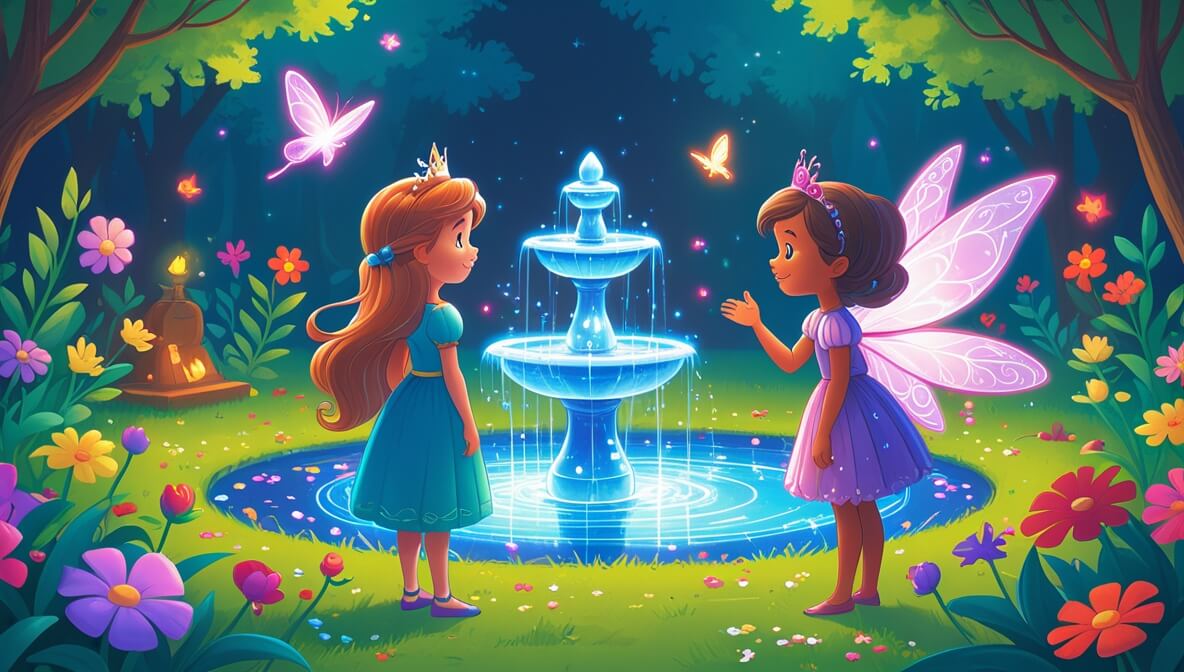

In a faraway kingdom, a young princess discovers a magical garden where wishes come true. But when a mischievous fairy grants her wish, the princess learns the true power of kindness and friendship.
Age Recommendation
3 – 12 years
Characters
Characters:
- Princess Mirabelle (a curious and kind-hearted young princess)
- Flicker (a playful and mischievous fairy)
- King Thaddeus (the wise and gentle king, father of Mirabelle)
- Queen Lorena (the caring and loving queen, mother of Mirabelle)
Story
Once upon a time, in the kingdom of Eldoria, lived a young princess named Mirabelle. She had long, flowing hair and wore a dress spun from the finest silks. One day, while exploring the royal gardens, she stumbled upon a hidden path. Intrigued, she followed it and discovered a magical garden filled with colorful flowers that seemed to whisper secrets. At the center of the garden stood a shimmering fountain.
A Wish in the Garden
As Mirabelle approached the fountain, a cheeky fairy named Flicker appeared. “Greetings, Princess!” he chirped. “This is the Fountain of Wishes. Make a wish, and I’ll grant it for you!” Mirabelle clapped her hands in delight. “I wish for everyone in the kingdom to be happy,” she declared.
The Mischievous Magic
In a flash, Flicker waved his wand, and a cascade of sparkling light enveloped the kingdom. But instead of bringing joy, the magic caused everyone to burst into uncontrollable laughter. Though laughter was good, it soon turned chaotic, with people unable to stop. Mirabelle realized her wish had gone awry.
Redemption and Friendship
Feeling responsible, Mirabelle knew she had to set things right. “Flicker, can you help me?” she asked, her voice full of determination. Flicker, although mischievous, was moved by her sincerity and agreed to assist. Together, they searched for another way to bring happiness to the kingdom.
The True Power of Kindness
Princess Mirabelle decided to spread happiness through small acts of kindness. She sang songs with the village children, helped the elderly with their chores, and shared stories with everyone she met. As she did, real joy spread throughout Eldoria. Flicker watched as the people’s laughter became genuine and heartfelt.
A Lesson Learned
With the kingdom finally at peace, Flicker appeared before Mirabelle once more. “You have learned the true power of kindness,” he said, smiling. “Magic is not always the answer, but a kind heart can achieve wonders.” Mirabelle thanked Flicker for his help and promised to visit the magical garden often, not for wishes, but to enjoy the beauty and peace it offered.
The end.
Moral of the Story
The story teaches that true happiness comes from kindness and helping others, rather than relying on magic or shortcuts. Small acts of compassion can have a big impact on those around us.
Questions to Think About
- Why did Princess Mirabelle’s wish not work as she expected?
- What did Mirabelle learn about true happiness?
- How did Flicker help Mirabelle fix her mistake?
- What acts of kindness can you do for others?
- Why is it important to think carefully before making a wish?
Do You Know
- Fairies are mythical beings found in many cultures, often depicted as small, magical creatures with wings.
- The concept of a wishing well is rooted in folklore, where water was believed to have healing powers and wishes made at wells would be granted.
Word Explorer
- Curious: Eager to know or learn something.
- Mischievous: Playfully causing trouble or harm.
- Sincerity: The quality of being honest and open.
Emotions in the Story
- Excitement: Mirabelle felt excited when she discovered the magical garden.
- Regret: She felt regret when her wish caused chaos instead of happiness.
- Joy: The kingdom felt true joy when Mirabelle spread kindness.
Color Your Scene
Imagine the magical garden with its colorful flowers and sparkling fountain. Draw the scene with bright blues, pinks, and yellows, capturing the beauty of the garden and the shimmering water of the fountain.
Parents’ Corner
This story is a wonderful opportunity to discuss the importance of kindness and empathy with your child. Encourage them to think about how they can spread happiness through small actions, just as Mirabelle did. This helps build emotional awareness and the understanding that every small act of kindness can make a big difference in the world around them.