
Captain Thistlebeard and his loyal crew embark on an adventure to find a legendary treasure hidden in a mysterious cave. Along the way, they face stormy seas, cunning rivals, and the true test of friendship.
Age Recommendation
3 – 12 years
Characters
Characters:
- Captain Thistlebeard (A brave and wise pirate captain)
- First Mate Barnacle (Loyal and clever, always ready with a plan)
- Sailor Blue (The youngest member of the crew, eager and curious)
Story
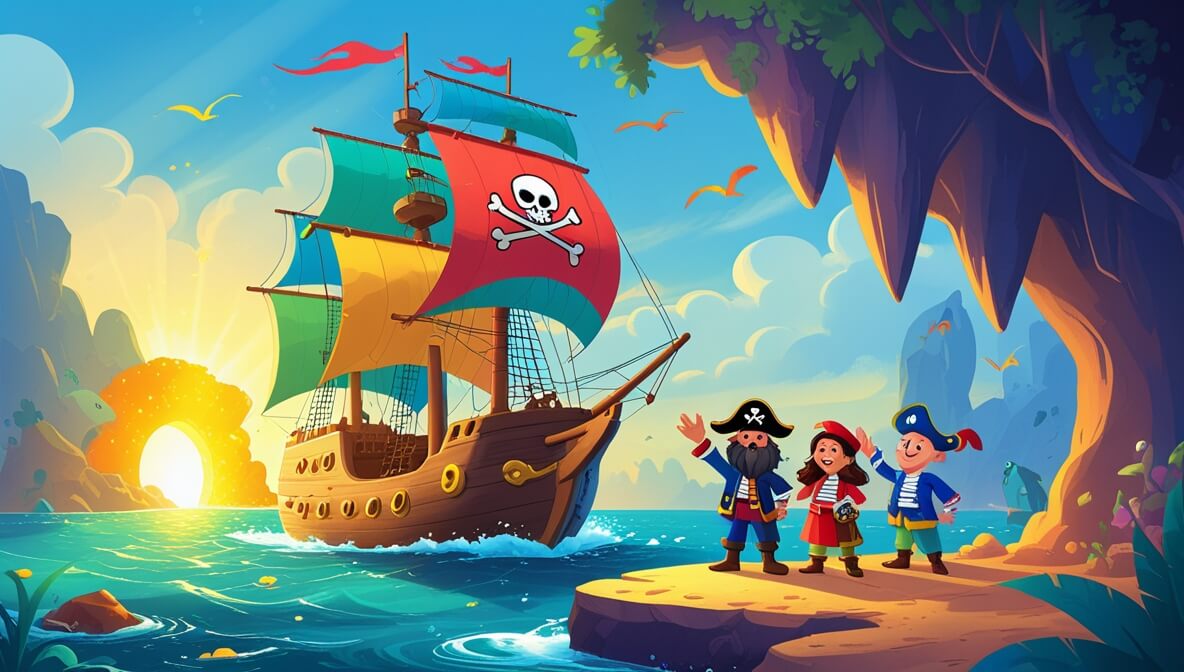
Once upon a time, in the vast ocean, there sailed a mighty pirate ship named the Seagull’s Wing. Its captain, Thistlebeard, was known far and wide for his bravery and kind heart. One sunny morning, Captain Thistlebeard stood at the helm, a mysterious map in his hand. “This, me hearties, is the map to the legendary Golden Pearl hidden in the Cave of Wonders,” he declared as the crew gathered around.
The Journey Begins
With sails unfurled, the Seagull’s Wing set out to sea, guided by the map’s ancient symbols. Sailor Blue, the youngest crew member, gazed at the waves with wide eyes. “Captain, do you think we’ll find the treasure?” he asked. “Aye,” said Thistlebeard with a grin, “if we stick together and stay true to our course.”
Stormy Seas
As the ship sailed further, dark clouds gathered overhead. Thunder clapped and the wind howled, tossing the ship on the mighty waves. “Hold steady!” yelled First Mate Barnacle, as he skillfully steered the ship through the storm. The crew worked as one, pulling ropes and securing the sails.
Rival Pirates!
Just as the storm cleared, a rival pirate ship appeared on the horizon. Captain Thistlebeard raised his telescope. “It’s the crew of the Crimson Shark!” he exclaimed. “Ready the cannons!” The two ships danced on the waves, firing cannonballs and shouting across the sea. But the Seagull’s Wing was swift and clever, outmaneuvering its foe with ease.
The Cave of Wonders
At last, they reached the island where the Cave of Wonders lay hidden. The crew rowed ashore, navigating through sandy beaches and towering palm trees. Inside the cave, shadows danced on the walls. “Stay close,” whispered Captain Thistlebeard, his eyes shining in the dim light. They followed the map deeper into the cave, until they saw a faint golden glow.
The Golden Pearl
Before them lay the Golden Pearl, resting on a pedestal of stone. “It’s real!” gasped Sailor Blue. But just as they reached for it, a trapdoor opened beneath their feet. With quick thinking, First Mate Barnacle used a rope to pull them to safety. “We did it!” he laughed, as the crew celebrated their treasure.
Heading Home
With the Golden Pearl safely aboard the Seagull’s Wing, the crew set sail for home. “It’s not just treasure that makes us rich,” said Captain Thistlebeard, “but the adventures and friends we find along the way.” As the sun set on the horizon, the crew sang songs of their journey, their hearts full of joy and camaraderie.
The end.
Moral of the Story
True treasure isn’t always gold or jewels; it’s the friendships and adventures that fill our hearts with joy and courage.
Questions to Think About
- What makes Captain Thistlebeard a good leader?
- How did the crew work together during the storm?
- What did Sailor Blue learn from this adventure?
- Why is it important to be brave?
- What would you do if you found a hidden treasure map?
Do You Know
- Many pirate legends are inspired by real events and historical figures. Pirates were known for their adventurous and often dangerous lives at sea.
- The “Jolly Roger” is the name given to the famous pirate flag with a skull and crossbones.
Word Explorer
- Pirate: A person who sails the seas, often in search of adventure or treasure.
- Telescope: A tool that makes faraway things look closer.
- Cannonball: A round, heavy ball shot from a cannon, used in battles at sea.
Emotions in the Story
- Excitement: When Captain Thistlebeard revealed the treasure map to the crew.
- Fear: During the storm when the ship was tossed by waves.
- Relief: When the crew escaped the trap in the cave and found the Golden Pearl.
Color Your Scene
Imagine the moment when the crew discovers the Golden Pearl in the cave. Picture the dim light of the cave, the glowing treasure, and the excitement on everyone’s faces. Use golden hues for the pearl, dark blues for the cave shadows, and bright colors for the crew’s pirate attire. Draw this scene, capturing the magic and wonder of discovery.
Parents’ Corner
This story is a great way to talk to your child about:
Teamwork: Discuss how Captain Thistlebeard and his crew worked together to overcome obstacles and find the treasure.
Bravery: Talk about how facing fears, like storms and rivals, can lead to great rewards and personal growth.
Problem-solving: Encourage your child to think about how the crew used their skills and quick thinking to escape the trap in the cave.
The importance of friendship: Highlight how the crew’s friendship and loyalty made their adventure successful and joyful.