
Join Captain Gulliver and his crew as they sail the stormy seas, seeking hidden treasure on the mysterious Isle of Echoes. Will their courage and friendship lead them to the legendary gold?
Age Recommendation
3 – 12 years
Characters
Characters:
- Captain Gulliver (a brave and clever pirate leader)
- First Mate Marlow (a loyal and witty sailor, always ready with a joke)
- Navigator Lila (a curious and smart girl with a knack for maps)
- Seagull Sandy (a friendly bird who guides the crew with her squawks)
Story
One bright morning, Captain Gulliver stood at the helm of his trusty ship, the Sea Whisperer, with the salty wind rustling his hat. “Today is the day we find the treasure!” he shouted to his crew. With a cheer, they set their sails towards the Isle of Echoes, a place whispered about in ancient legends, said to hide a chest of gold beyond imagination.
The Map’s Secrets Unfold
As the ship glided across the sparkling sea, Lila studied the map, its edges worn with age but its secrets clear to her keen eyes. “Just past the stormy waters, we must find the hidden lagoon,” she explained. The crew gathered around, excitement bubbling like the waves beneath their feet.
The Storm’s Fierce Dance
Suddenly, the skies darkened, and the wind howled fiercely. “Hold steady, mates!” Captain Gulliver commanded as the ship rocked and swayed. Marlow cracked a joke about dancing with the storm to lighten the mood, but everyone clung tight, hearts pounding. The ship braved the storm’s fury, each wave a wild horse the Sea Whisperer rode bravely.
Echoes of the Island
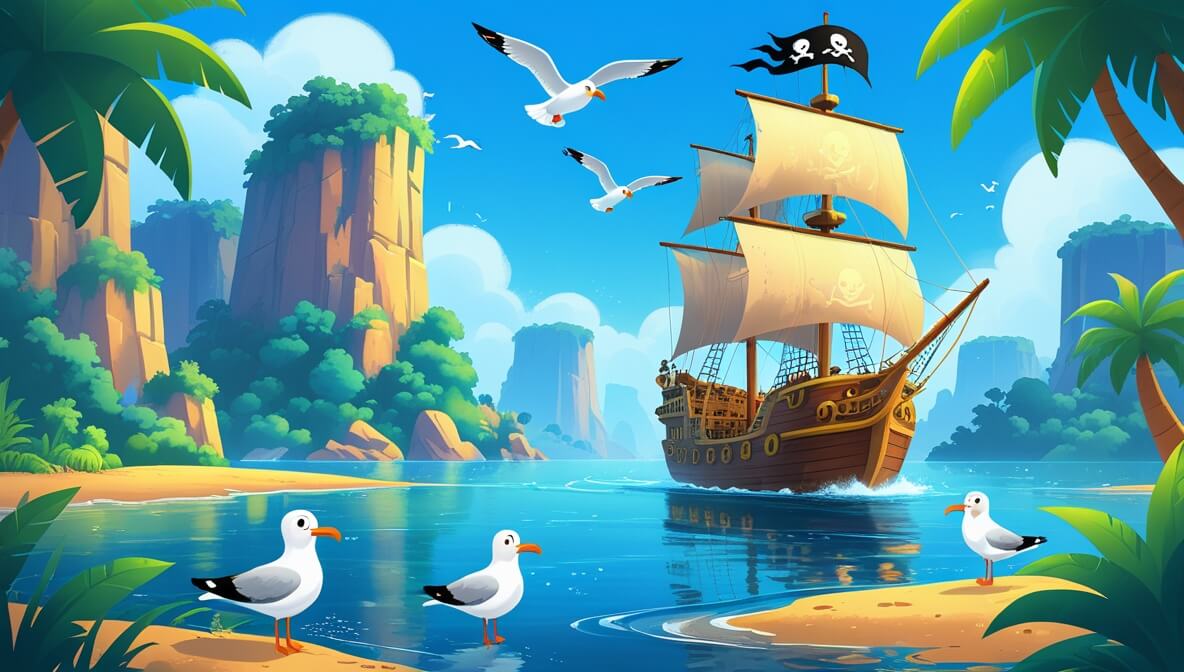
After the storm passed, the crew found themselves before the Isle of Echoes. The island’s cliffs rose majestically, and the sound of seagulls echoed all around. “This is it,” said Sandy, flapping excitedly. They rowed to shore, their hearts racing with anticipation.
The Mysterious Cave’s Treasure
On the island, the crew ventured through a dense jungle until they reached the entrance of a mysterious cave. Inside, sparkling crystals illuminated the path, leading them deeper into the earth’s belly. At last, they found it—a chest shimmering with gold, just as the legends had promised. “We did it!” shouted Lila, her eyes wide with wonder.
Homeward Bound with Riches and Tales
With the treasure safely aboard, the crew set sail for home, their hearts full of joy and adventure. “We’ve found more than gold,” Captain Gulliver mused, watching the sun dip below the horizon. “We’ve found friendship and courage.” As the Sea Whisperer danced over the gentle waves, the crew laughed and sang, their spirits as bright as the stars.
The end.
Moral of the Story
The story teaches that the greatest treasures are found in friendship, courage, and the adventures shared along the way. Working together and believing in one another leads to the richest of rewards.
Questions to Think About
- How did the crew work together to face the storm?
- What made the Isle of Echoes special to Captain Gulliver?
- Why was it important for the crew to listen to Navigator Lila?
- What emotions did the crew feel when they found the treasure?
- What lessons can we learn from Captain Gulliver and his crew?
Do You Know
- The word “pirate” comes from a Greek word meaning “to attempt,” hinting at the adventurous spirit of pirates.
- Pirates often had parrots as pets on their ships because parrots are colorful, intelligent, and can mimic sounds.
Word Explorer
- Pirate: A person who sails the seas, often seeking treasure and adventure.
- Treasure: Valuable items like gold and jewels, often hidden or buried.
- Courage: The ability to face fear or danger bravely.
Emotions in the Story
- Excitement: Felt by the crew as they set sail for the Isle of Echoes.
- Fear: Experienced during the storm, when the ship was tossed by the waves.
- Joy: When the crew found the treasure and realized their adventure’s success.
Color Your Scene
Imagine the moment when the crew first sees the Isle of Echoes after the storm. Picture the tall cliffs, the lush jungle, and the bright blue sea. Use colors like deep greens for the jungle, bright blues for the sea, and gray for the cliffs. Draw the Sea Whisperer approaching the island, with seagulls flying overhead.
Parents’ Corner
This story is a great way to talk to your child about:
Teamwork: Discuss how Captain Gulliver and his crew worked together to face challenges and find the treasure.
Bravery: Talk about how the crew showed courage during the storm and on their adventure.
Exploration: Encourage your child to think about exploring new places and ideas, fostering curiosity and discovery.
Friendship: Discuss the importance of building strong bonds and supporting one another in all adventures.