
Whispering Moonbeam Garden

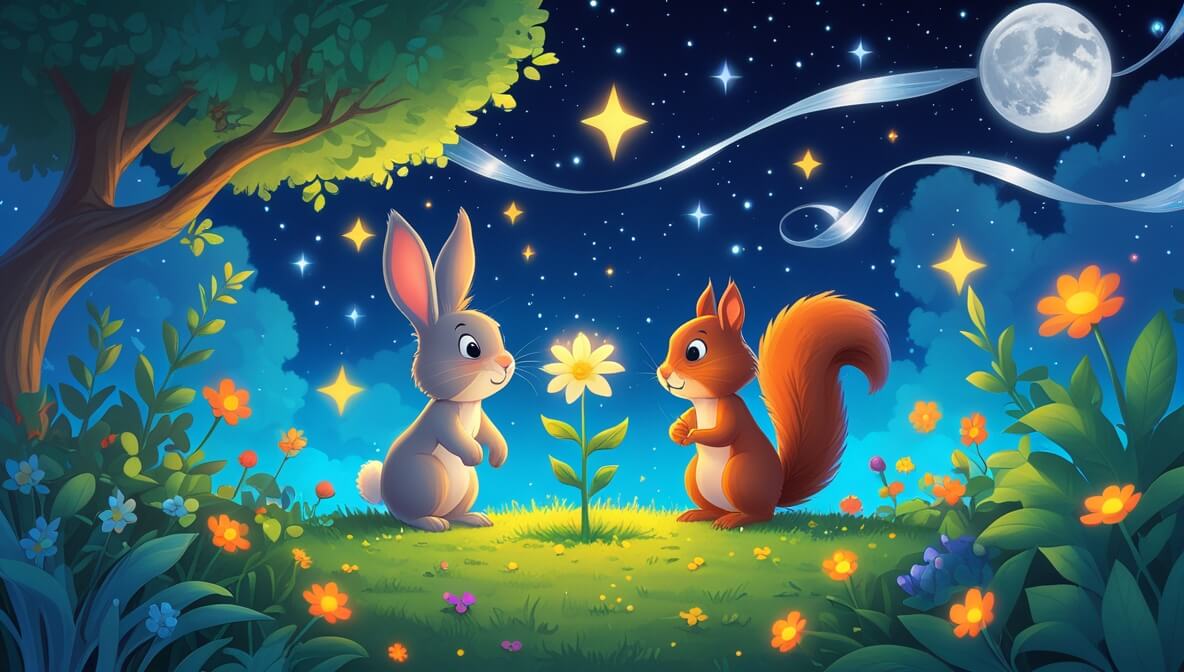
Curious bunny and playful squirrel under starlit sky, gazing at glowing flower with twinkling stars and moonbeams.

This Story Belongs In Categories:

Everything related to the story

Reviewed by Child Educator
Reading Time: 4 minutes

In a colorful garden, a curious bunny and a playful squirrel discover a magical flower that opens only at night, leading them to a world of twinkling stars and friendly moonbeams.

Age Recommendation

0 – 4 years

Characters

Characters:

  • Benny the Bunny (a curious and adventurous bunny with soft, floppy ears)
  • Sally the Squirrel (a playful and cheerful squirrel with a bushy tail)

Story

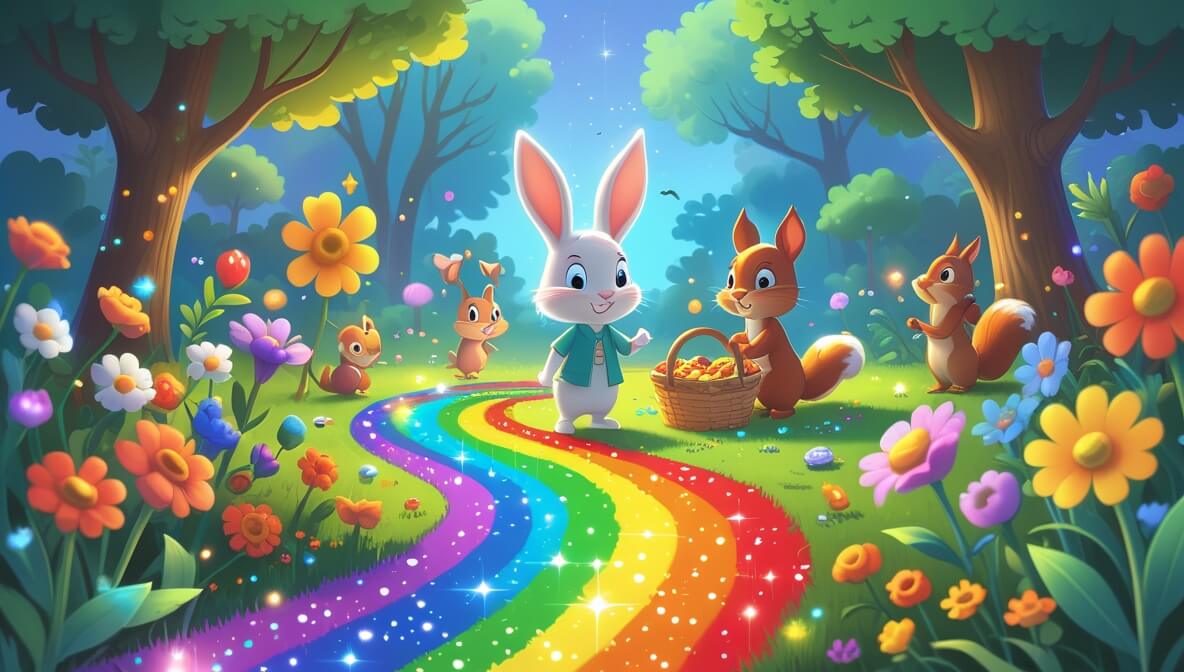
Once upon a time, in a colorful garden, there lived a curious bunny named Benny. He loved to hop around and explore every corner of the garden. One day, he noticed a beautiful flower that he had never seen before. It was closed and seemed to be hiding a secret. Benny’s eyes sparkled with curiosity as he hopped closer to the flower.

The Mysterious Flower

Just then, Sally the Squirrel, Benny’s best friend, scurried over. “What are you looking at, Benny?” she asked, her tail twitching with excitement. Benny pointed to the mysterious flower. “I think it opens only at night,” he whispered. Together, they decided to wait until the moon rose to see the flower’s secret.

The Flower’s Magical Glow

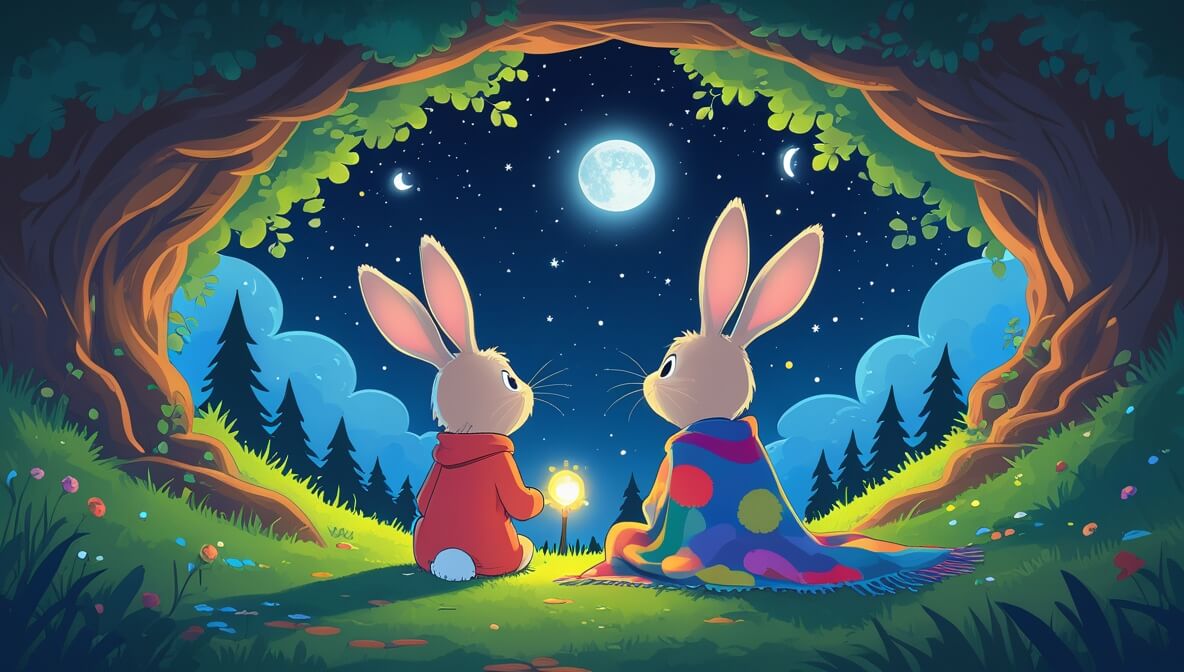
As the sun set and the stars began to twinkle, the flower slowly opened. A soft, magical glow emerged, and Benny and Sally gasped in awe. The glow led them to a path of twinkling stars. “Let’s follow it!” exclaimed Sally, and off they went, hopping and scurrying along the path.

A World of Twinkling Stars

The path led them to a magical world where the stars danced and the moonbeams sang. Benny and Sally giggled as they played with the friendly moonbeams, who twirled around them like ribbons of light. “This is the best adventure ever!” squeaked Sally. Benny nodded, his heart filled with joy and wonder.

The end.

Moral of the Story

Curiosity and friendship can lead to magical adventures and wonderful discoveries. Always be open to exploring and sharing moments with friends.

Questions to Think About

  • What made Benny curious about the flower?
  • How did Benny and Sally feel when they saw the flower open?
  • What did Benny and Sally discover in the magical world?
  • How do you think the moonbeams felt when they met Benny and Sally?
  • What new adventure would you like to have with your friends?

Do You Know

  • Some flowers open at night and are called “night-blooming flowers.” They rely on the moonlight instead of sunlight.
  • The moon doesn’t make its own light; it reflects light from the sun.

Word Explorer

  • Curious: Wanting to know more about something.
  • Glow: A soft light that shines steadily.
  • Twinkle: To shine with a sparkling light.

Emotions in the Story

  • Curiosity: Benny felt curious when he saw the mysterious flower.
  • Excitement: Sally was excited when she saw the magical glow.
  • Joy: Benny and Sally felt joy while playing with the moonbeams.

Color Your Scene

Imagine the moment Benny and Sally see the magical flower open. Picture the garden filled with colors, and the flower glowing with a soft light. Draw the twinkling stars guiding them to the magical world, and use blue and silver for the moonbeams dancing around them.

Parents’ Corner

This story is a wonderful way to talk to your child about:

Curiosity: Encourage your child to explore and ask questions about the world around them, fostering a love of learning.

Friendship: Discuss how sharing adventures with friends can make experiences more joyful and memorable.

Nature’s Wonders: Take time to explore nature with your child, observing the beauty and mystery it holds.

Imaginative Play: Inspire your child to create their own magical adventures, nurturing creativity and imagination.

Did you like Whispering Moonbeam Garden?

Share the magic of StoriesZZ with your friends, it would mean a lot to us ❤️

Facebook
WhatsApp
Email
X
Reddit
Pinterest
Threads
LinkedIn

We hope you loved this story.
Keep the adventure alive by searching on StoriesZZ, where new adventures await!

Check related stories from StoriesZZ

Frequently Asked Questions

Bedtime stories are short tales or narratives read to children before they go to sleep, often designed to be calming and entertaining.

Yes, reading bedtime stories can help relax (both to children and adults), making it easier to fall asleep.

Bedtime stories can be enjoyed by children of all ages, from infants to early teens, with age-appropriate content for each stage.

Establishing a consistent bedtime story routine can enhance a child’s cognitive development, language skills, and problem-solving abilities. Additionally, the dynamic between the storyteller and the listener fosters a strong emotional connection between the parent and child.

Since bedtime reading occurs when a child is tired and calm, it becomes linked to those sensations. As this practice continues, bedtime reading not only reinforces but also amplifies feelings of sleepiness and relaxation due to this connection. With regularity, it transforms into a strong cue for sleep.

Many parents enjoy bedtime stories so much that they wish to continue the tradition indefinitely. A study commissioned by Wonderbly revealed that the average parent reads or tells bedtime stories to their children until they are eight years old, while 10% maintain this practice until their child is 13 or older.

Focusing on a calming story instead of worrying about sleep allows your mind to relax and drift off. Additionally, bedtime stories can evoke fond childhood memories of being read to by a gentle, comforting voice at bedtime.

The exact moment when the first bedtime story was shared remains unknown. Researchers argue that pinpointing the origins of storytelling is impossible, suggesting that humans have been narrating tales since we developed the capacity for speech. It is unique to humans to create stories, and in turn, stories define our humanity.

Reading one or two stories before nap time and bedtime can easily add up to 20 minutes. If your child no longer takes naps, dedicate 10 minutes to reading during quiet time or a family reading session, followed by another 10 minutes at bedtime.

Consider your child’s age, interests, and attention span. Look for stories with themes that resonate with them and are suitable for bedtime.

Reading aloud fosters connection and engagement, while allowing children to read independently can help build their confidence and literacy skills.

Encourage your child to ask questions, predict what will happen next, or even act out parts of the story.

If your child isn’t interested in listening to a bedtime story, try engaging them in the selection process by letting them choose the stories that resonate with their interests. You can also explore different storytelling styles, such as acting out the story or encouraging them to participate by asking questions or predicting what will happen next. This can make the experience more interactive and enjoyable for them.

Skip to content